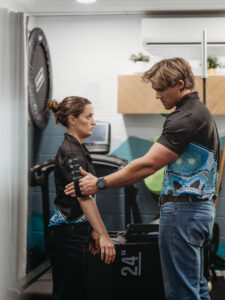
Shoulder pain is one of the most common reasons people seek help from a shoulder pain physio Woodford clinic. Whether it’s caused by sport, work, or everyday movement, shoulder injuries can quickly limit your strength, mobility, and confidence. The right physiotherapy treatment can help you recover safely and return to the activities you enjoy.
Understanding Shoulder Pain: Common Injuries We See in Woodford
Shoulder injuries often develop from overload, poor movement patterns, or sudden trauma. The most frequent issues treated by physiotherapists include:
Rotator Cuff Injuries
- Tendinopathy
- Partial tears
- Overuse strain
- Weakness causing instability
Shoulder Impingement
- Pinching of soft tissues
- Pain with lifting overhead
- Common in netball, rugby, and gym training
Bursitis
- Inflammation of the shoulder bursa
- Pain with reaching, lifting, or lying on the affected side
Instability & Labral Irritation
- Often seen in younger athletes
- Clicking, catching, or “giving way” sensations
These injuries respond well to early physiotherapy intervention.
Symptoms You Shouldn’t Ignore
Shoulder pain can present in many ways. Key symptoms include:
- Pain lifting the arm or reaching overhead
- Weakness when carrying objects
- Night pain or difficulty sleeping on one side
- Clicking, catching, or instability
- Sharp pain during sport
- Reduced range of motion
If symptoms persist for more than a few days, it’s time to see a shoulder pain physio Woodford for assessment.
How a Shoulder Pain Physio Woodford Assesses Your Injury
Physiotherapy is the gold‑standard treatment for most shoulder injuries. Your physio may use:
Hands‑On Treatment
- Soft tissue release
- Joint mobilisation
- Dry needling
- Trigger point therapy
Targeted Exercise Therapy
- Rotator cuff strengthening
- Scapular stability training
- Posture correction
- Range‑of‑motion exercises
Movement Retraining
- Safe lifting techniques
- Overhead movement correction
- Sport‑specific mechanics
Education & Load Management
- How much activity is safe
- When to rest vs. when to move
- Modifying work or sport temporarily
This combination helps reduce pain, restore strength, and prevent recurrence.
Your Rehab Timeline: What Recovery Usually Looks Like
Every shoulder injury is different, but most follow a predictable rehab pathway:
Weeks 1–2: Pain Reduction
- Manual therapy
- Gentle mobility work
- Reducing inflammation
- Avoiding aggravating movements
Weeks 3–6: Strength Building
- Rotator cuff strengthening
- Scapular stability
- Posture correction
- Gradual load progression
Weeks 6–12: Functional Training
- Sport‑specific drills
- Work‑related movement retraining
- Overhead strength
- Return‑to‑activity planning
12+ Weeks: Return to Sport or Full Workload
- High‑level strength
- Power and endurance
- Injury‑prevention strategies
Your physio will tailor this timeline to your goals, lifestyle, and sport.
Returning to Sport: Woodford‑Specific Guidance
Shoulder injuries are common in Woodford’s active community. Your rehab may include:
Netball
- Overhead strength
- Landing mechanics
- Passing technique retraining
Rugby
- Tackling mechanics
- Rotator cuff power
- Shoulder stability under load
Equestrian
- Posture and core control
- Shoulder endurance
- Balance and rein control mechanics
Gym & Fitness
- Safe overhead lifting
- Scapular control
- Load progression plans
A shoulder pain physio Woodford understands these local demands and builds rehab around your sport.
When to Book an Appointment with a Shoulder Pain Physio Woodford
Book an appointment if you experience:
- Pain that lasts more than a few days
- Difficulty lifting your arm
- Weakness or instability
- Pain during sport or work
- Night pain or sleep disruption
- Clicking or catching sensations
Early treatment leads to faster recovery and fewer long‑term issues.